Enjoy your apps. Don’t get stuck scrolling.
Linger is a screen time app that helps you put down your phone before a quick check on apps like Instagram or TikTok turns into half an hour you didn’t plan.
Coming soon to the App Store
How Linger works
-
Open your apps as usual.
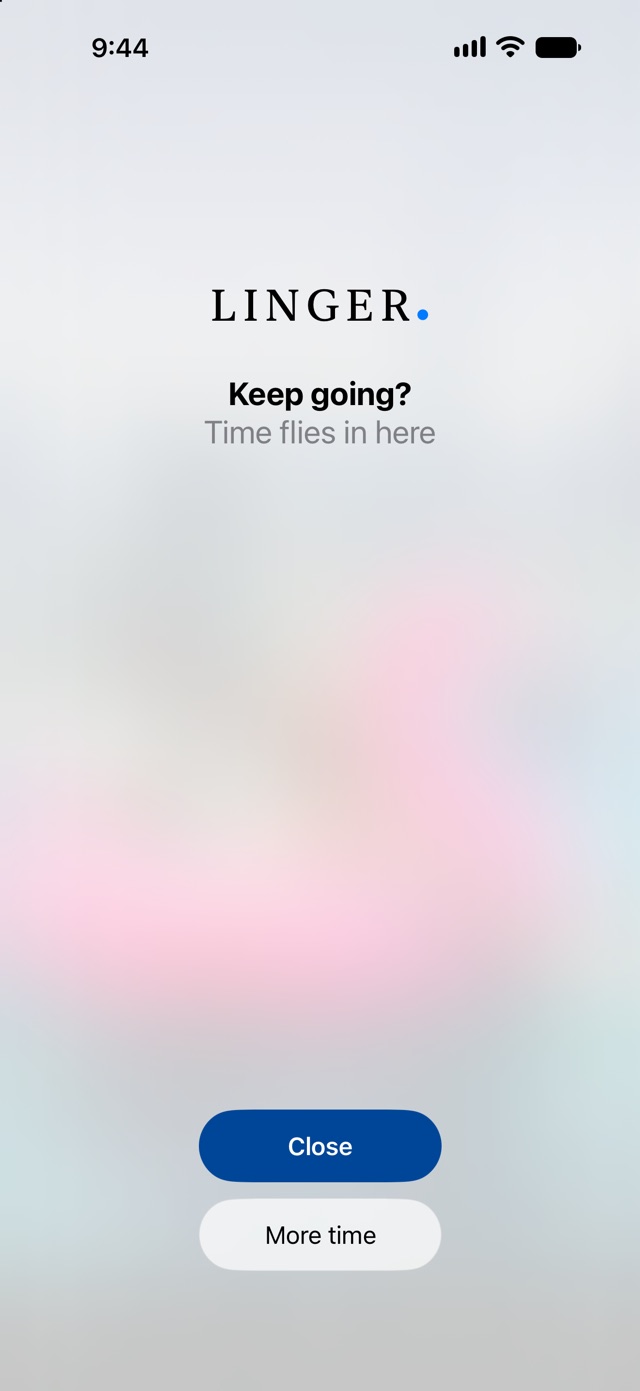
After a few minutes of use, Linger checks in: “Keep going?”
-
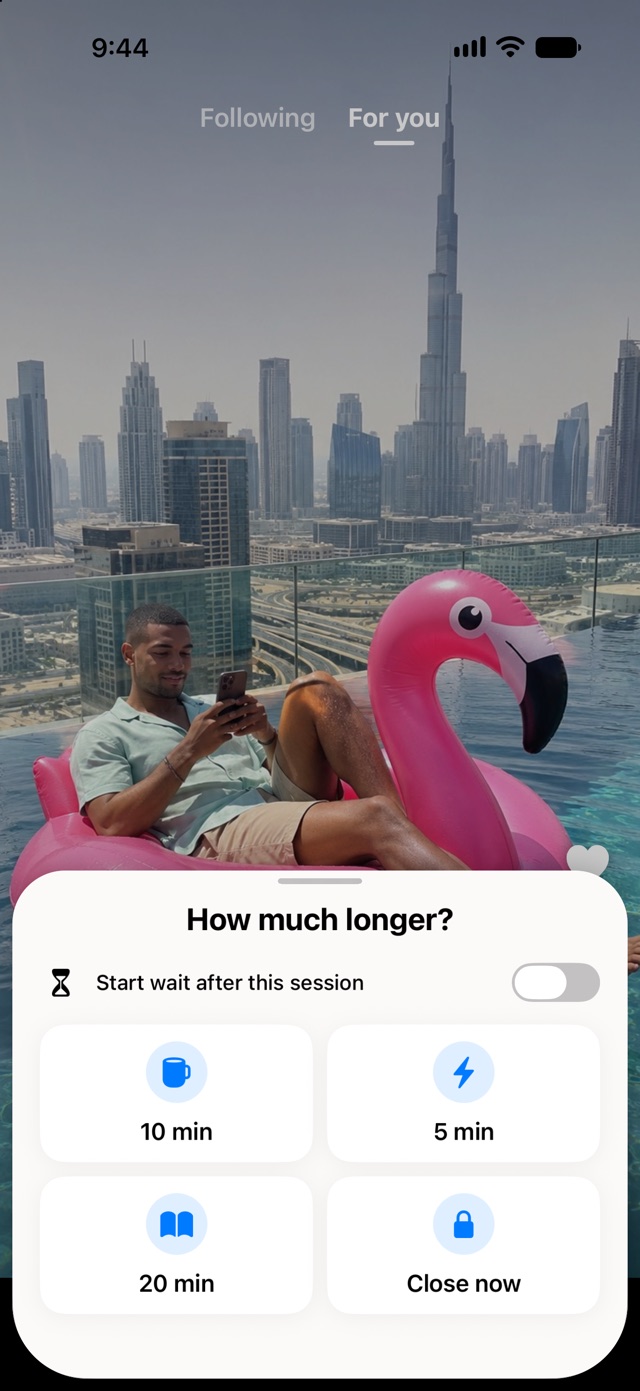
Choose how much longer.
Tap Close if you’re done, or tap More time to pick a session length.
-
Take a short break.
When you tap Close or your session ends, Linger starts a 3‑minute wait. After that, you can open the app again whenever you like.
Questions
Why do I get stuck scrolling?
It isn’t a lack of willpower. What keeps you going a little longer than you meant:
There’s no last page. A book has chapters, an episode has its credits, a match has a final whistle. Each gives you a natural moment to stop and decide. A feed keeps going as long as you do, so that moment never comes by itself.
The next one might be the best one. Part of the fun is not knowing what’s coming. One more swipe might bring the funniest thing you’ll see all week. Your brain’s reward system, dopamine included, responds most to that expectation.
You’re in the flow. Once you’re enjoying it, your thumb keeps moving without a decision. Nothing asks whether you’d like to go on, so you simply do.
Time flies. Enjoyable minutes feel short. You look up, and half an hour has gone.
None of this needs fixing. It only needs an ending: a moment where you decide, instead of the feed deciding for you.
Why do I break my own phone rules?
On Sunday evening, motivated and full of good intentions, you decide: no scrolling in bed this week. It feels easy, because Sunday-you isn’t craving anything. On Tuesday at 11 at night, tired, in bed, with the phone already in your hand, someone else is in charge. Tuesday-you never agreed to the plan, and doesn’t feel bound by it.
Psychologists call this the ‘hot-cold empathy gap’: in a motivated state we badly underestimate how strong an urge will feel later. It’s why diets planned after dinner fail at midnight, and why the plans we make for our phones break within days.
When they break, they tend to break completely. One slip, and the inner voice says the day is ruined anyway, so why not keep going. A strict plan doesn’t just fail; it fails all at once.
Can’t I just use Apple’s Screen Time?
Linger is built on it. But on its own, Screen Time is the plan from the question above. App Limits give an app a daily budget, and Downtime switches apps off at set hours: both decided in advance by a motivated you, and met by a tired you who never agreed to them. Same plan, same problem.
What about app blockers like Opal, Freedom or AppBlock?
They’re often beautifully designed, with thoughtful extras and more options than Apple offers. In essence, though, they work like Screen Time: limits and blocked hours you plan in advance. The key difference is strictness: a block you can’t stop until the time is over, and focus sessions during which your apps simply won’t open.
In the first weeks, while you’re motivated, that works really well, and many people see their screen time drop sharply.
Underneath, though, something nags. Taking away a choice, even one you made yourself, triggers what psychologists call ‘reactance’: wanting something more the moment you can’t have it. Then a friend sends you a video, the block runs for another hour, and you find yourself fighting your own app just to watch it. Sooner or later it breaks, and it breaks completely: you uninstall it and never look back.
What about apps like One Sec that make you pause first?
It’s a thoughtful idea: a breath to take, or a few seconds to wait, every time you open an app. Two things wear it thin.
It asks at the wrong moment. When you open an app, you’ve already decided to go in, and nothing has happened yet. The pause stands between you and something you chose, not between you and a scroll you’d regret.
It becomes a toll booth. What happens every time soon stops being noticed; psychologists call it ‘habituation’. The pause is no longer a moment of choice, just a few seconds you wait out without thinking. You get used to it and annoyed by it at the same time, and an annoyance looks for a way round.
So why Linger?
Linger doesn’t try to win a fight with your brain. It works with it, at the one moment that matters: when a quick check is turning into a scroll.
It waits until you’re actually scrolling. Opening an app does nothing, and quick checks pass untouched. Linger steps in only after a few minutes of use.
It asks instead of blocking: “Keep going?” You can close the app, or choose more time. Nothing is taken away, so there is nothing to fight.
It gives the feed an ending. The question is the chapter break the feed never had. One moment of choice is enough to switch off the autopilot.
It has you wait a few minutes, not a day. Whether you close the app or your session ends, a short wait begins. An urge rises, peaks and fades within minutes if you don’t feed it. A few minutes is long enough for that, and short enough to feel fair: a speed bump, not a roadblock.
Will I still get stuck scrolling sometimes?
Yes. Linger is a useful tool, not a miracle. Now and then you’ll still scroll for longer than you meant: after a long day, on a lazy Sunday morning, or just because it’s that good. Linger asks; the answer is always yours, and sometimes it will be more time, or even a pause from Linger.
What changes is the everyday scroll: on the bus, in a break, before bed. More of your long sessions get a moment to decide, and more of them end where you wanted them to. Ten minutes here, half an hour there adds up every week: less screen time, without giving up the apps you enjoy.